
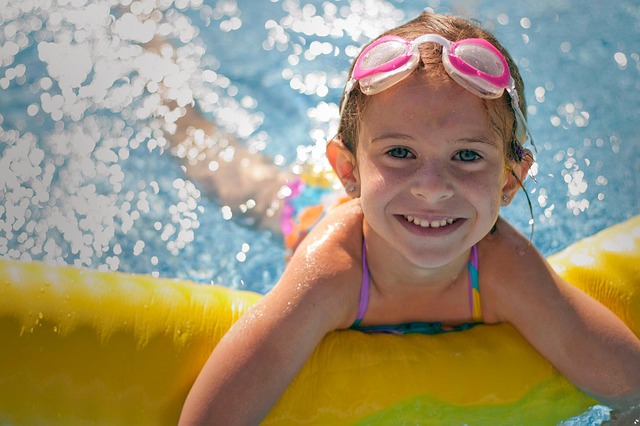
 Drowning is one of the leading causes of death for children with autism. That statistic is certainly startling. But what makes it even more devastating is that with the right measures in place drowning deaths can be prevented. To understand how to prevent these drownings, it’s important that parents and caregivers understand why children with autism are at such high risk.
Two factors are at play. One, many children with autism have a tendency to wander. In fact, according to the National Autism Association, 48 percent will try to elope. And two, many children with autism love water. When children with autism wander to bodies of water—pools, ponds, lakes, etc.—they can very quickly place themselves in danger. Tragically, in an attempt to get closer to the water, many fall in and aren’t able to swim to safety.
Parents and caregivers of children with autism can help to protect their children by teaching them about the dangers of water as well as how to interact with it safely. Here are a few tips to implement in order to keep children with autism safe around water.
Check water first.
Many children with autism have a tendency to wander. If this is an issue with your child and they go missing, the Autism Wandering Awareness Alerts Response and Education Collaboration (AWAARE) explains that you should always check any bodies of water—pools, ponds, lakes, etc.—first in your search.
Make swim lessons a priority.
The best way for your child to be able to protect themselves around water is to know how to swim. This extensive guide on aquatic therapy for children with autism features several pieces of advice on how learning to swim will benefit your child and on how to find a swim lesson program that will work for them.
It also touches on another reason why swimming is great for kids with autism. It protects them by keeping them physically healthy. As the guide notes, more than half of children with autism are overweight. Swimming is the perfect activity for them because it is a wonderful cardiovascular exercise that is great for building muscle and is easy on the body’s joints.
Make sure neighborhood pools are fenced in.
If you’re a pool owner and the parent or caregiver of a child with autism, it’s easy for you to make sure your pool is properly fenced in and that the gate is always locked. However, your neighbors may not be as vigilant. Be open with them about your child’s needs. Ask them to always, always keep their pool gates closed and locked and to keep their fences clear of any objects that could be used to climb over them. If your child wanders, ask them to keep an eye on their pool and to alert you immediately if they see your child. If your child does go missing, ask neighbors to check their pools immediately.
Establish the “#1 rule.”
Autism Asperger’s Digest makes the distinction that learning to swim and learning about water safety are two separate skills that should be addressed separately with your child. In this article (http://autismdigest.com/water-safety-the-ultimate-life-skill/), the publication stresses that the “#1” water safety rule you should impart to your child is never to go near any body of water if an adult isn’t present.
With summer upon us, now is a great time to begin teaching your child about water safety. The payoff is huge. Not only will your child be safer, but chances are they’ll love swimming and the many benefits it brings.
About Vee Cecil
 Vee Cecil loves studying and sharing her findings in wellness through her recently-launched blog. She is a wellness coach, personal trainer, and bootcamp instructor.
An autistic child who elopes? Is an autistic child who wasn’t properly supervised. That’s neglect.
If an autistic child elopes and DIES? Well, that’s criminally negligent homicide. The parent/caregiver/school who let the kid elope ought to be prosecuted to the fullest extent of the law!
I disagree with this… my son is 22 years old with severe autism, nonverbal and low functioning. He LOVES the water. But I would NEVER allow swimming lessons for him and he only goes by bodies of water with a LIFE VEST ON, because if I do not want him to drown, I HAVE to keep him floating. On a boat, in a pool, going fishing, means a life vest on. period.
Many kids with autism seek water out, sensory wise it feels really good to them and is calming. But, i think, those kids that drown may certainly have a false sense of security because they can swim well, in the pool during swimming lessons. So it also makes sense “to them” they can swim anywhere because they do not understand the difference between a supervised pool from an unsupervised pond or lake, jump in swim swim swim, get out , tire and drown. Teach your child with autism “safety around water” ok but they have autism right? So as parents with a child with autism we don’t have the power of reason, it went out with the autism diagnosis. Teaching a child with autism , just isn’t that easy.
So what can you do with a kid on the spectrum that LOVES water?
Keep it supervised , ALWAYS!
My son LOVES water so…. he has a jacuzzi, which helps keep him clean, (which is huge) and gives him some great proprioceptive pressure that many kids with autism crave. It is clean water that is changed with each use . Maybe some day he will have a hot tub, but I doubt it because all those chemicals that need to be used , much like a pool, to keep the bacteria from forming are nasty……so probably not, now that I think about it. As to the exercise question and how great it is, to swim, yea maybe, but not worth the risk, in my opinion. As a parent with an adult child with autism, I would encourage those with younger kids on the spectrum to really think about this issue of swimming lessons, as you do with everything else you have to decide on. Keep an open mind, listen to all opinions and follow your gut on what is best for your child and family.