

 Project Lifesaver International is a non-profit organization that bridges the technological gap for “at risk” populations and public safety agencies. They provide their services to the police, fire/rescue and other first responders in providing equipment and training to quickly locate and rescue “at risk” individuals with cognitive disorders including those individuals with autism who are at risk of wandering.
‘Project Lifesaver has over 1,300 participating agencies throughout 47 states in the U.S., Canada, and Australia, and has performed 2,922 searches over the last 15 years with no serious injuries or fatalities ever reported.’
We got in touch with Elizabeth Kappes from Project Lifesaver to learn more.
Can you tell us about the Protect and Locate Service and how it works?
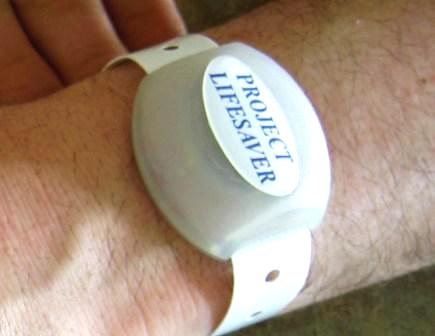
PAL is not your ordinary GPS device. Along with the digital watch/transmitter PAL also has a portable receiver which notifies the caregiver of a wandering event through the use of Radio Frequency, GSM & GPS technologies.
For example, if an “At Risk” individual wearing a PAL watch/transmitter breaches the PAL RF “safe zone” the PAL portable receiver will sound an audible alert and the LCD display will flash red indicating your loved one has wandered from zone set by the caregiver. PAL will generate an email alert and send an SMS (text message) with the date and location of the wandering event. For the caregiver’s convenience, PAL also has an internet portal available that is accessible worldwide from any PC or smart phone and allows for real time tracking with regular location updates.
The video below explains how the project lifesaver program works.
Our CEO & Founder of Project Lifesaver International, Gene Saunders started the organization as a result of failure in the search in rescue operations. He thought there has to be an easier way to locate lost people. He received information on radio tracking technology, which is still used to track wildlife, and he thought, why can’t this work for humans and we can develop a program? He received a grant from a local hospital to launch a pilot program in Chesapeake, Virginia. The program took off after the first successful search averaging in less than 30 minutes in April 1999.
 Does anyone working on the project have any links to the autism community?
We are highly connected throughout the autism community from grassroots level to Autism Speaks, National Autism Association, Autism Society, FAU-Card, and others.
How do you raise awareness on the issues of wandering and safety?
We raise issues through our CEO and Chief of Staff attending national conferences where we speak and exhibit. We also keep our members, caregivers, medical professionals, supporters, informed on what we do and we have a strong emphasis on training/education for our members, as well as, how to use and implement tracking and locating technology into the program for those who wander.
 Have you had any success stories?
Our member agencies are required to fill out an after action report of for rescues. To date we have had 2,922 rescues.
How do you become a member? Is there a cost involved?
An agency must submit a Letter of Intent to Project Lifesaver International Headquarters. A sample Letter of Intent is located under the Get Involved – Agency Application. The average cost for an agency to join ranges from $4,000-$4,800 excluding instructor travel and expenses. You can also call us for additional information at (757) 546-5502. Grant opportunities are available from time to time.
Can you tell me a little about the indieGoGo fundraiser?
The PAL fundraiser we did on IndieGoGo was to raise enough to fund the cost of the PAL unit along with a year of service for 5000 families with “At Risk” individuals that have cognitive disorders prone to the life-threatening behavior of wandering.
We are working hard at expanding our efforts state by state to become providers through Medicaid, Medicare, or private insurance for the PAL system.
For more information you can visit the http://www.projectlifesaver.org/Pal-info/order/ to see if financial support may be available through your provider.
For more information on Project Lifesaver’s programs visit www.projectlifesaver.org.
Follow us on Facebook
Follow on Twitter @ProjectLifesavr