

 Is your child terrified by loud noises? Does he speak in a rather unusual way – perhaps very quietly or too loudly or in a monotone? Or is his speech and language delayed?
Apart from hyperacusis there are several other auditory problems that can give rise to such things as we learn from the late Dr Carl Delacato in his book, The Ultimate Stranger and the late Dr Guy Bérard who detailed the technicalities of such auditory differences in his book Hearing Equals Behavior.
First to return to hypersensitivity, albeit not hyperacusis. It is clear that many children with ASD are super-sensitive, hearing things that most other people are unaware of, from the other end of a telephone call to the sound of a ‘silent’ dog whistle: something that is often reflected by the fact that they speak very quietly.
Regardless of age, some of these children (like young children during early development), will also find loud noises very hard to cope with. This is the child who is overwhelmed by any unexpected loud noise – whether it be fireworks, thunder or traffic. As Gunilla Gerland tells us in her book A Real Person, a moped revving so disorientated her that she felt as if the ground beneath her had disappeared and that she would either fall over or explode from the inside. Just imagine how absolutely awful that must be. Hardly surprising then that many children have a ‘meltdown’ or freeze on the spot when a fire alarm goes off suddenly – as with Raymond in the film Rainman.
Next to hypo-sensitivity; a mild deafness which is often overlooked – or even misattributed to autism. And yet the signs are obvious once you know what to look for, for this is the child who is fascinated by noisy things like the washing machine and lawn mower, loves the sea and the noise of thunder. He also enjoys playing noisy games, banging, shouting, flushing the toilet, slamming doors, ripping paper – and more.
However, because he is not able to hear the rise and fall of your voice or the emotions it conveys, he may have problems learning to speak and, even when he does, his voice may be monotone and emotionless and/or be overly loud.
Then there is the apparently strange category of ‘white noise.’ This is the child who hears internal sounds as with one boy who said that his ears were noisy inside, making a constant ‘shushing’ sound or the girl who said she could hear the blood flowing in her veins and the sound of her heart beating. Hardly surprising then that the auditory ‘fuzz’ interferes with their concentration and their ability to learn.
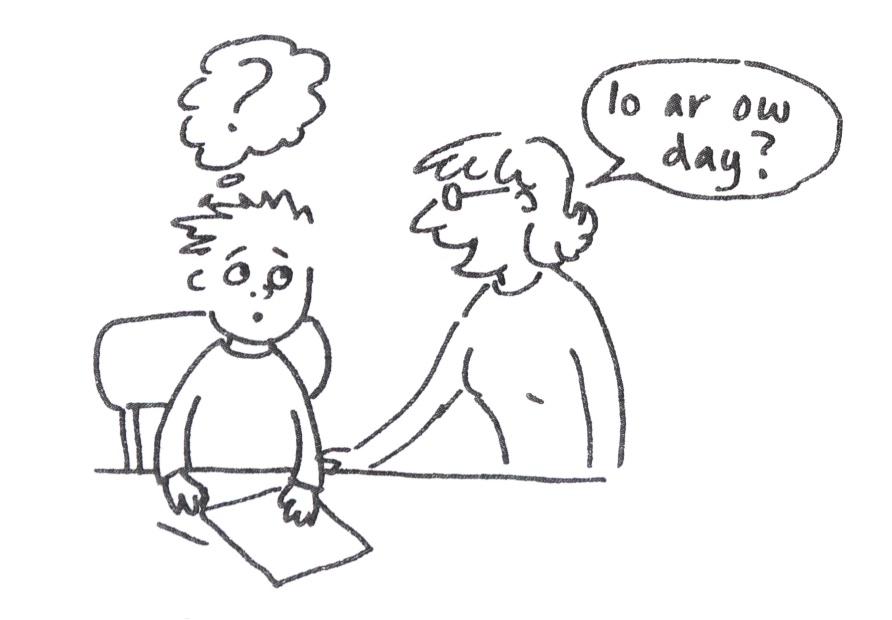
Dr Bérard also identified a number of children who simply find it hard to hear some frequencies clearly and so ‘misplace’ some letters and ‘mishear’ words; making it sound as if other people are ‘talking nonsense.’ This is the child who struggles to understand (or follow) conversations and has great difficulties learning to speak and communicate clearly. Sadly such problems are compounded by seeing how easily other people understand each other and converse, thereby destroying his confidence and self-esteem.
~~~
Top Tips
* Identify the causes of his behavior.
* Share your knowledge with any teachers/other professionals who work with him.
* If he is hyper choose quiet toys.
* If hypo offer toys that make a noise – organizations that work with deaf children may offer ideas.
* If his hearing is very acute, make sure you don’t talk about him unless you are absolutely sure he cannot hear you (unless you actually want him to hear).
* Give him some ‘noise protection’ (headphones and music) during thunder storms etc.
* Remember that if he mishears things he will not necessarily be able to pin-point where sound is coming from and that can potentially be dangerous when near traffic.
~~~
Nowadays we also know that some children also have CAPD (Central auditory processing disorder) also known as Auditory Processing Disorder (APD) so we’ll look at that next week.
