


I have never been quite like most people. I was aware of my difference from a very early age. It was as though I viewed the world in an entirely different way from the people around me.
Things that they took seriously seemed inconsequential to me. Things that I took seriously seemed inconsequential to them. I felt perpetually misunderstood. Adults were always telling me I was “gifted” because I knew so much about animals, was a very fast learner, and could write and draw very well for my age. And yet, at the same time, it seemed as though I couldn’t do anything right. I was always tripping over my own feet. I had trouble staying seated in school — literally. My body would slide out of the chair, and I would find myself on the floor. I couldn’t stop daydreaming and looking out the window, no matter how hard I tried.
“Little” things were big deals to me: my apple juice had to be just the right temperature, or I couldn’t drink it. My blanket had to be cool to the touch for me to use it — but not too cool, either. I couldn’t wear certain colors, such as yellow socks, because they were “itchy.” I described many scenarios in everyday life as “uncomfortable.” Shoes were uncomfortable. Going anywhere without a stuffed animal was uncomfortable. My parents were mostly amused by what they seemed to see as finickiness and bossiness. I would state my needs very clearly and not understand that they sounded bizarre to other people.
Adults also thought I was a liar because I often had extreme reactions to things, only to be fine the next moment. In school, I would report I had the worst headache and nausea of my life, only to find that it had suddenly disappeared when the teacher announced it was story time. These situations made me look dishonest, but I wasn’t lying. Ailments would come with intensity and go away unexpectedly.
I also had a strong sense of justice and became overwhelmed with indignation and confusion when other people behaved cruelly. I remember doing so as early as my toddler years. I didn’t understand other people at all. I didn’t relate to girls, boys, or anyone, except animals.

Other quirks: I flapped my hands and arms when excited. I had trouble making eye contact. I became fixated on one subject for long periods of time, to the point of obsession. And socializing was very difficult. I much preferred to live in my own world. These quirks carried on into adulthood.
It wasn’t until last year, at the age of 24, that everything started making sense to me. I was a college grad, working a minimum-wage, part-time job at a coffee shop. And much like many other times in my life, I just wasn’t getting it somehow. I accidentally burned myself regularly. I couldn’t recall people’s orders and would have to ask them to repeat them two, sometimes three times in a row. I couldn’t count change and froze when someone gave me cash. People would ask me questions about the drinks and food, and I would be clueless. This wasn’t the first time I’d struggled with a job. And yet, I knew I was intelligent. The amount of incompetence I felt was really bothering me.
One night after work, I talked to some of my newer friends about it. I expressed that I was afraid I was going to be fired. Not only was I unable to perform “simple” tasks, but I also couldn’t seem to get the other workers to warm up to me. I didn’t know what I was doing wrong. One of my friends, Joey — who is now my partner — said, “Well, it’s hard when you’re an Aspie.” I had no idea what he was talking about. He then told me that he had Asperger’s and that several people in our group of friends did. He was surprised I didn’t realize I had it, too.

I could see how Joey had Asperger’s — and his son Drew, especially. They used to have a business in which they built remote-control planes. I had never met people as smart and as tech savvy — or as obsessive. They would have conversations in which I understood about two words, and Drew was only fourteen. Asperger’s meant math/science super genius with no social skills, right? I was lacking in the latter — but also definitely lacking in the super-genius department.
Joey shook his head. “Do me a favor. Google search ‘females with Asperger’s,’ or ‘Aspie girls.’ I know you don’t identify as female, but you were raised that way.” It’s true. I’m transgender, and I was female assigned at birth.
And so I looked up female Aspies. I felt as though I were reading my own biography, even down to the detail of often not identifying with girls or gender at all. Others even had that difficulty with sitting in the chair. Everything I read described me perfectly. It was eerie. How had I never known this? I’d been sent to several specialists over the years. I’d been diagnosed with ADD, depression, and Borderline Personality Disorder — and yet, no one had ever suggested Asperger’s. When I fit the description so perfectly, how had it gone undetected?
This weekend, I am at Flight Fest with Joey and Drew. It is a gathering of people interested in the building and flying of remote-control airplanes. I am not one of those people. It’s interesting to be surrounded by so many people who are clearly Aspie and obsessed with planes. It makes me feel pretty neurotypical. And yet, I’m not. My obsessive areas of knowledge have been different from the stereotype, as they often are for female-socialized Aspies. I read a great quote once that explained why male-socialized Aspies stand out more. I’ll paraphrase: An Aspie girl will be obsessed with horses. An Aspie boy will be obsessed with batteries. And for girls, the trouble socializing often goes undetected, because Aspie girls become obsessed with the study of interaction. They overcompensate, which makes sense given the emphasis of social graces for girls.
As far as the super-genius part: no, I have never been interested in how objects or concepts work if they don’t relate back to people. My obsessions have ranged from animals, particularly cats, to Harry Potter, to the singer Morrissey of the 1980s British band The Smiths, to the works of the 19th century Russian author Dostoevsky, to the television show King of the Hill. There have been times in my life that I was pretty much only interested in things I could relate to these very specific topics. Recently, my interests have grown somewhat broader. I like social sciences, psychology, and different genres of music. But the amount of time I spent obsessively researching Morrissey, Drew spends researching planes and other stuff that I don’t understand. I’m still an obsessive, prolific writer — and yet, I can barely do my laundry or remember to feed myself sometimes.
Of course, there are plenty of Aspies who don’t fit the gender stereotypes. My partner was also female socialized, and he is much more mathematical and logical than I am. Some people have suggested a link between Asperger’s and being transgender. I have definitely observed a link in myself and many people I’ve known. How much of this is biology? How much is socialization?
The truth is, I don’t know. All I do know is that, when I looked up “Aspie girls,” it was a huge relief to know I wasn’t alone. I don’t identify as female, but I identified with the stories I read. And now, I’m not as hard on myself for being different. All my life, I’ve been labeled as obsessive, weird, smart (but not “applying myself”), shy, lazy, awkward, gullible, and creepy.
But the truth is, I’m just Aspie. And I wouldn’t want to “cure” that.
Reprinted with permission from the author. Original can be read on thebodyisnotanapology.com.
About the Author
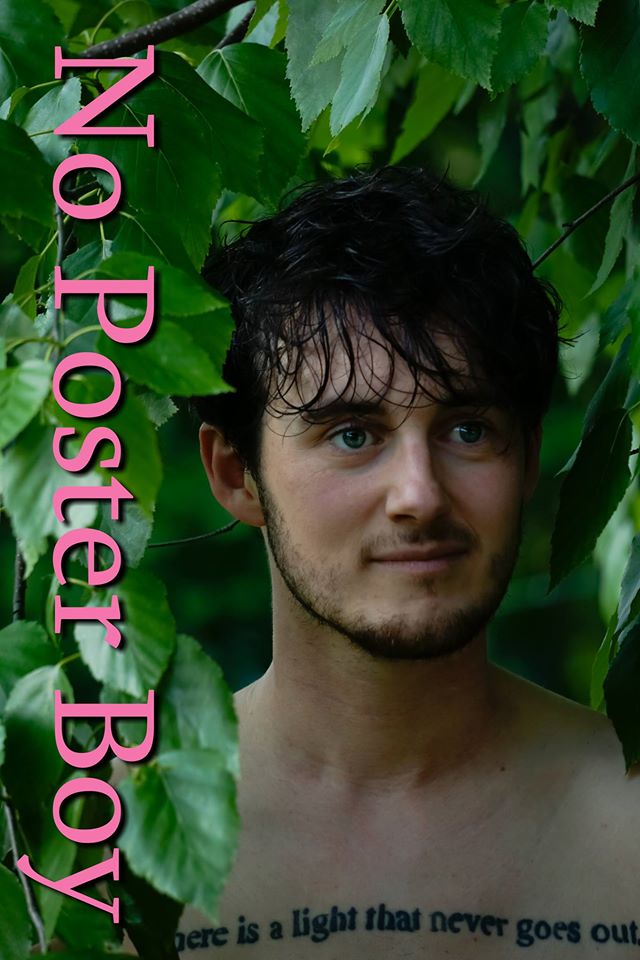
Elliott DeLine (born 1988) is a writer from Syracuse, NY. His three books, Refuse, I Know Very Well How I Got My Name, and Show Trans are compulsively readable, semi-autobiographical fiction about the misadventures of a transgender young adult with Asperger’s as he struggles with his identity, sexuality, relationships, mental health and more. His essays, interviews, and excerpts have been featured in publications such as The New York Times, The Collection: Short Fiction from the Transgender Vanguard, Original Plumbing Magazine, The Advocate, The Body is Not an Apology and The Huffington Post. Elliott is the founder and former vice president of the non-profit CNY for Solidarity as well as the lead coordinator of Queer Mart, an LGBTQ artist and crafts fair. Elliott is also a visual artist and songwriter. He is setting out on the road with his partner Joey and his partner’s kid Drew, along with their two cats Mittens and Snowflake, and will be living in a motor home full time, starting this September.
-His books are available to purchase at elliottdeline.bigcartel.com
-Follow and support him more intimately, and receive newsletter and monthly gifts of his art and writing at patreon.com/elliottdeline
-Follow his travel blog at catroadtrip.net