


Scott writes on his YouTube page about the film:
Please share this video. Four fathers with one thing in common, they are all raising a child with Autism. In their owns words they share their struggles and successes, fears and hopes, while projecting a quiet strength. Let them inspire you to do it differently.
This thought provoking film tells life as it is for these men and I have to say that as a mother watching the film, I well and truly had my eyes opened. This film gives out such such a positive message and I believe that it is truly unique in that it shows that dads have a voice, which is so rarely heard.
The entire film which was originally released in 2012, can be viewed below.

Having watched the film I got in touch with Scott Phillips, director of the film, in order to ask him some questions. He kindly put me in touch with the dad’s featured in the film, so that I could catch up with them and find out how life was for them all now.
Below is my interview with Scott, I wanted to ask him what inspired him to make the film and how the film evolved.
Continues here
Scott Phillips, director of the film
Mike Whitty and Kyle
Damian Gobel and Nathan
Jonathon Ayers and Sam
Mike Guido and Maria


My wife and I had our first child in 2007, a boy named Luke. When Luke was 3 years old he was not talking, nor was he doing a lot of things that other 3 year olds were. We scheduled an appointment with his doctor who referred us to the Child Development and Rehabilitation Center for testing. After several hours of observation from child psychologists and a developmental pediatrician, Luke was diagnosed with autism. Almost as shocking as the diagnosis itself was the fact that the experts dropped the bomb, gave us a pamphlet on autism, and said good luck. We spent the next few weeks searching our area for programs that could help Luke. We were lucky enough to have a great resource here in Eugene, Oregon called The Bridgeway House that offers therapy for children and families with autism and related disorder.
As a dad I didn’t really know what my role would be with Luke now that we had this diagnosis. What would our relationship be like? Would I ever be able to talk with him? Would he ever say “I love you”? I started looking or answers from a father’s perspective online, but only found information from a mother’s point of view. I had all these questions, so I figured there must be other guys out there wondering about the same things. My day job is in video production and I’ve made a few narrative films in the past so I decided to use my skills to create a film that would give comfort to, and answer a lot of the questions for, dads of children with autism.
I treated the filming and interviewing process as sort of therapy. I asked these dads all the questions I wanted to know because I knew if anyone knew the answers, it would be these guys.
Did you have any knowledge/experience of autism before making the film?
I worked in television news for more than 10 years as a photographer, and in that time I remember doing several stories on autism whenever the subject made headlines, but other than that, I had no experience with it until my son came along.
What other projects have you worked on?
Right now I’m in the middle of writing a screenplay that centers around a single father learning how to build a relationship with his autistic son. I have a small team of talented people that will be helping raise funds for the project. I’m hoping to direct this feature film in the spring of 2016 with a release date sometime in 2017.
Before working on “Do it Differently” I had written and directed 2 narrative films in the comedy and horror genre, and produced dozens of short films and commercials.
How did you approach the fathers in the film?
When I decided to make the film, I contacted the autism society of Oregon, who put me in touch with a couple of the dads in the film (Jonathan Ayers and Damian Goble). They were both very open to talking about the subject in order to help other dads. Mike Guido happened to be in town performing his one man show, “A Real Man – Dad. Daughter. Autism.” I showed up during his sound check and he was happy to be involved. Mike Whitty is a long time friend of my brother-in-law. He was more than willing to talk and has been the film’s strongest advocate.
My approach was to use this as an opportunity to hear from the guys we don’t often hear from – strong men who are dealing with autism on a daily basis.
How long was the filming process?
It took about 6 months to coordinate all the schedules and shoot the interviews. The original plan was to have a camera follow each family for an extended period of time, but I didn’t have the budget for that. Luckily, each family had extensive home videos, which turned out to be far more intimate and revealing than if we had followed them with our own cameras. All the families were very gracious and let us use their home movies for the film.
I felt that the film had such a positive message in that dads are important, that they have a positive role to play. Very often dads are forgotten. This film gives dads a voice. The styling of the film I felt was simplistic in that in every frame the focus was totally on the dad talking on camera. I could not take my eyes off the screen.Was this intentional?
I like to think of it as a beautiful accident. At first I thought we would have much more video to use for the film and wouldn’t be looking at the interviews so much, but during the editing process it was hard to cut away from these guys who are spilling their guts on camera. To me it hits close to home, so I wanted to see their faces more as they talk about these things that are hard to talk about.
Where will the film be shown?
Since the 2012 release, we’ve had a lot of positive responses. We’ve had several showings here in Oregon sponsored by local autism support groups, we’ve sold hundreds of DVDs through our website, fanbladefilms.com, and have just recently put the film in its entirety on YouTube for everyone to watch and share.
Will there be a follow up film?
I like to think of the screenplay I’m currently working on as a follow-up film to “Do it Differently.” Although it will be a narrative film and not a documentary, the subject matter will be similar and I hope to bring even more attention to the fathers who work hard every day raising their children and doing the right thing.
Next are the interviews with the fathers in the film.
Continues here
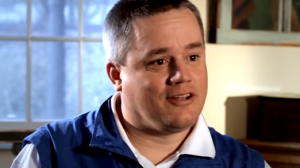
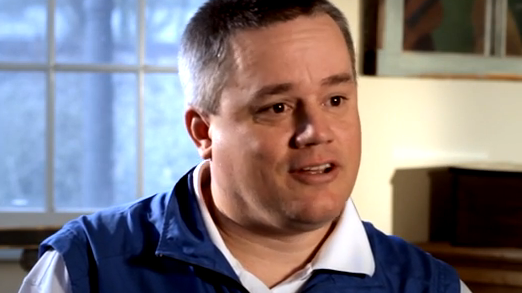
When you tell in the film of how Kyle, at age 4, told of how Jack could go and live with him when you die, it made me cry. Can you tell me a little about their relationship now?
Kyle and Jack have a great relationship. I doubt it is like a typical sibling relationship. Kyle looks after Jack. They go to the same high school. Even though Jack is doing very well Kyle keeps an eye on Jack. Kyle is a lifeguard at the pool where Jack swims.
I still believe Kyle will help with Jack later in life. He understands it is his responsibility and he has never shied away from it. We don’t know what that role will be. Jack continues to surprise us with what he has been able to accomplish.
We now have a goal of Jack living in assisted living by age 25. Jack really wants to be on his own. Fortunately for us the women in my wife’s family historically live a long time.
Jack and Kyle play video games together. Now that Kyle is driving he takes Jack out for dinner or ice cream. Typically though Jack prefers to spend time by himself. Jack goes to all of Kyle’s football and Lacrosse games. Jack would prefer to be somewhere else but he likes supporting Kyle.
Jack is obviously a fantastic swimmer and I enjoyed watching the shots of him in the pool. Is he still enjoying swimming? Has he earned any more certificates?
Swimming is going well. April of 2014 Jack’s pediatrician was concerned about Jack’s weight. Jack was 5’7” tall and weighed 215 pounds. On May 1st our pool opened. Jack started swimming one mile per day. That’s 68 lengths of the pool at our club. By mid-July Jack weighed around 185. He now weighs about 175. Jack took off 40 pounds in four months.
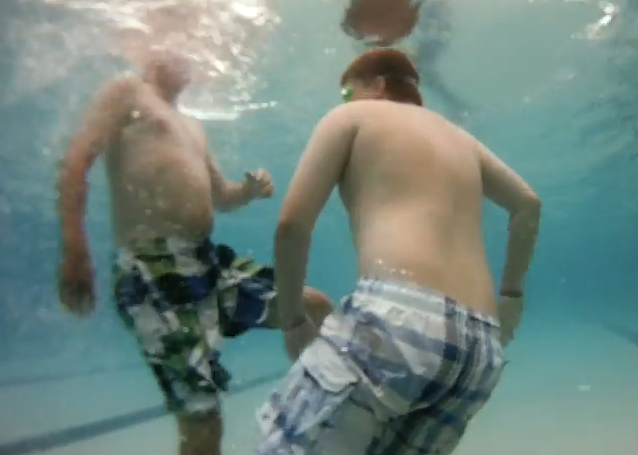
Jack will not compete at any level. We had him in Special Olympics for two years. The idea of competing caused him a lot of anxiety. At the end of the 2nd year Jack refused to attend the state competition. Jack doesn’t usually dig his heels in like that. He is more of a “go with the flow” type of person. When he said he wasn’t swimming competitively anymore we had to respect that.
Unlike the other dad’s in the film, you candidly say that you would take Jack’s autism away in a heartbeat, not for you but for him. Could you tell us more about this please if you are happy to do so.
People’s answers to this question often surprise me. I understand that parents love their children unconditionally. I also agree that autistic people are tremendous people. Autism is a major mental illness. Wouldn’t any parent prefer their child have no major illnesses of any kind? Jack has dreams of being an animal trainer or a veterinarian. He currently volunteers at the humane society. Jack will do well in the world but Autism will have a negative effect on his dreams.
Autism has closed a lot of doors for Jack. We’ve been able to open some of those doors back up. Janet and I wanted all doors open for both of our children. I wouldn’t care what direction Jack wanted to go with his life. We just wanted Jack to have all of the opportunities he wanted available to him.
It’s confusing to me that people wouldn’t take away a child’s autism. Would you take away Bi-Polar disorder? Would you take away Schizophrenia? Would you take away cancer? Why wouldn’t you take away Autism? I’ll never waiver on this one. I love Jack. I enjoy being around him. He’s made so many people better people. Jack is a world changer. I think he could change the world as a typically developing person as well.
I look at Jack’s life with his peers like this. In grade school he was in the middle of the circle. In Junior High he was moving toward the edge of the circle. In high school Jack is outside the circle. People are always nice to Jack but for the most part they don’t notice him. What is next for Jack now that he is graduating this year? Will he ever have contact with people outside our family? Get rid of Autism? Where can I sign up? I’ll be there in five minutes.
At the beginning of the film you tell of how you were in denial about Jack’s diagnosis and that you were so very angry. This is not often discussed and openly shared, so I thank you. What advice would you give to other dads out there who are going through similar challenges?
This is a tough question to answer. I’m certainly not an expert in dealing with denial. How can you give someone in denial advice about something they don’t think they are in? If someone would have given me advice I would have brushed it off.
I have counseled a few people with their child’s autism diagnosis. My friend’s daughter had a son diagnosed with autism. I had never met the daughter but she called and I talked to her for a while. Two years later when I met her in person she said to me, “You were the first one who told me our life wasn’t over.” I hadn’t even remembered saying that. Now that is the first thing I tell someone with a recent diagnosis. Your child can still have a great life. You can still live a happy life raising a child with Autism.
I guess the other thing I would tell someone is regardless of whether you believe the diagnosis you still need to proceed forward with services. We did. That was my wife’s doing. She led the charge in getting Jack help in the early years. I helped but I still chose not to believe the diagnosis. I think deep down inside I really knew. I just didn’t want to hear it. Even if your child is not Autistic the services will help your child advance.
Continues here
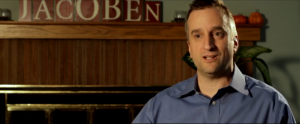
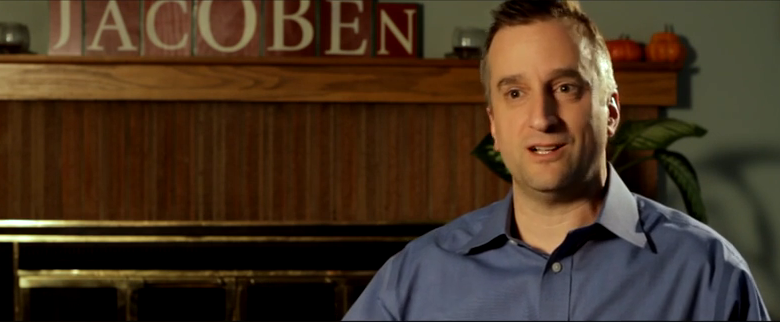
You say in the film that Nathan is treated the same as his brothers. What do you enjoy doing as a family? You mention that you have to be creative.
We do “try” to treat Nathan the same as his brothers, however, it is a challenge and we have to really focus our attention on not helping him too much. Communication is very hard for him and he likes static or structured activities. We try to do dynamic things together like some board games, hikes in our neighborhood or shooting the basketball.
What do you and Nathan enjoy doing together?
Other than above…and like all three of my son’s, I enjoy spending time with Nathan on a one on one basis. For example, if we take a trip to the grocery store, we’ll write the list together, he will help read from the list, push the cart and help with the checkout. He needs constant cues to keep focused and I do most of the talking but I enjoy our time together.

I love it in the film when you tell of how you get to hold your eleven-year-old’son’s hand, in that you get to do this for longer than other dad’s. I thought that this was a beautiful statement. How is Nathan now when out and about? Do you still hold his hand?
He is 15 now and is as tall as me (actually slightly taller than me but I am in denial:). I still get to hold his hand, and so does his Mom, but mostly now because of safety reasons…like in a parking lot or along a busy street – (he does not notice the danger of cars like we do). When out and about..I don’t hold his hand as much because I want him to be as independent as possible, and I don’t want to embarrass him:)
Are his younger brothers fiercely protective of him?
I would say his brothers are not any more protective than any other sibling relationship. With the exception of when he is at school, Nathan is with his Mom or me…so the twins don’t have to really be fiercely protective.
Continues here
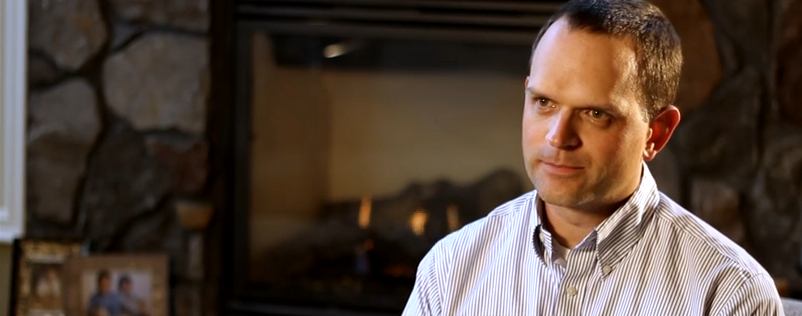
We learn in the film that Sam has no interest in fishing. Is this still the case?
Presently, Sam hasn’t really voiced an interest with fishing. Logan and I went out last year and he landed his first fish on a fly rod. He was pretty excited about it. Personally, I haven’t been getting out to do much fishing in recent years.
When we discuss fishing with Sam, he is concerned of falling in the lake or stream. So, to relieve those anxieties, I have enrolled Sam and his brother in swimming lessons. We believe the boys need to know how to swim anyway.
Sam and Logan passed their first swimming class. Sam however has difficulty with the back stroke and that held him back from passing the second class. We are attempting the second class again in April.
I have taken the boys out for day hikes around Mount Hood and the Columbia Gorge. That has also been a first step in getting Sam introduced to the outdoors.
What activities do you enjoy doing together?
Sam and I have recently been enjoying simple field trips around Portland. These trips might be simply walking downtown Portland or neighboring cities, riding the Max or the OHSU Tram. We may catch a movie at the Wunderland or Laurelhurst Theatres where the environment is a bit more relaxed.
For years, Sam has had a fear of going to the zoo. He was frightened by the thought the animals might “roar” or “growl”. On a recent field trip, Sam changed our plans by saying he wants to make the day “Madagascar Day” and asked to go to the zoo. I followed his suggestion and in that moment, his fears of the zoo were gone. It was our goal to see all the characters in the Madagascar movies. Other visitors in the zoo were a bit confused when he informed them it was Madagascar Day, but I simply rolled with it. Sam sought to have the 16th of every month to be Madagascar Day!
In May, Sam and I will be expanding our field trip region by riding Amtrak to Seattle. He is fascinated by trains but is overly anxious when near them. Even in the train historical museum, he will approach only the smallest of the trains. To overcome this, we will be taking Amtrak to Seattle, a city that he hasn’t been to since infancy.
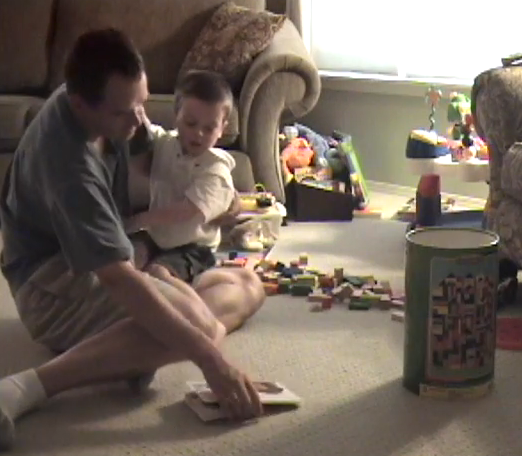
Regarding our concerns of what we did that might have caused the autism, we pretty much left those concerns to the wayside. As mentioned in the film, we initially had those thoughts but concluded that it doesn’t matter what might have caused the autism. Rather, it was more important of what we were going to do to help Sam. We simply transitioned our concerns of what we might have done to what can we do now.
Early into Sam’s diagnosis, I read John Elder Robinson’s book, “Look Me In the Eye.” While I found the book to be humorous, I found that some people with this diagnosis can be independent and have careers. Since then, I have recognized others in the community who likely have autism or a similar diagnosis, yet they hold down jobs.
These children can be taught to increase their abilities and independence. They simply need the right support to do so.
What support did you receive?
Our support following Sam’s diagnosis was largely from Barbara Avila, our RDI consultant. She helped us understand what was occurring with Sam as well as techniques how to connect with Sam and motivate him. She helped us out with understanding the IEP’s and even attended a couple of them with us.
We have to also mention the support that we received from Sam’s dayschool as well as his elementary school. The dayschool was a great environment for Sam to observe his peers, becoming accustomed to maintaining attention and simply preparing him for elementary school. For kindergarten, we kept him at the same dayschool. They had an individual who provided one-on-one support for Sam.
While the elementary school has been overly understanding, they have also held expectation for Sam for positive behavior, maintaining attention, following instructions and being responsible for himself. He started in mainstream classes with an aide helping him throughout the day. When in second grade, he informed the aide to go away as he didn’t need her anymore. She continues to support him when needed and he is pulled from class for specialized instruction in the more challenging courses. The Learning Specialist at the school, Melissa Berg has been awesome with keeping us informed of issues and truly being and advocate for Sam. Each morning, Sam goes to each classroom in the elementary school to tell every teacher hello and wishes them a good day.
Can you give other examples of how you have helped Sam with other practical things?
Michelle and I found we were “coddling” Sam and not asking him to do things on his own. We picked out his clothes, we were the ones making his bed, cleaning his room and doing his dishes as well as any other tasks.
This was not consistent with our overall goal for Sam, which was for him to gain independence. He wasn’t going to make strides in this if he wasn’t going to learn how to do things on his own. We therefore requested he do those things for himself. Some tasks took a little longer to master and there are still times where he is stubborn on doing things we previously did for him. But now, Sam will tell you he dresses better than his younger brother (and I tend to agree with him).
I have an interest with DIY projects and have brought both Sam and Logan into helping with some of them. This includes operating some hand and power tools under close supervision, painting and sanding. Presently we are changing Sam’s bedroom in to an Oregon Ducks room. He is a big fan of the Oregon Ducks and is therefore motivated to help out with the project.
When we finish a project, we can say that we did it together. Commonly, Sam will ask whether I recall him helping out in the garage or whether I recall building those shelves with him. Since watching the movie again, Sam has been asking whether I recall him watering the three plants. He apologized for the yelling in the earlier videos where I asked his assistance to water the plants but really emphasizes that he did well on his last attempt. He is building positive memories and a sense of accomplishments from these experiences.
Sam and Logan have also – mostly under protest – helped out with yard work, picking up fallen pears, raking leaves and weeding.
We have also turned the tables so Sam can teach us some of his skills or interests. He has an ability to recognize the roars from Godzilla movies and tell you what year the movie was released containing that specific roar. We created a “Godzilla Roar Quiz”, which Sam will overwhelmingly win every time.
Should we have a question about a children’s movie, we simply ask Sam who the actors were or when the movie was released. He is accurate most of the time. These simple interactions boost his moral and lures him to be engaged in the conversation.
Through these efforts, Sam has become more willing to volunteer around the house.
Continues here
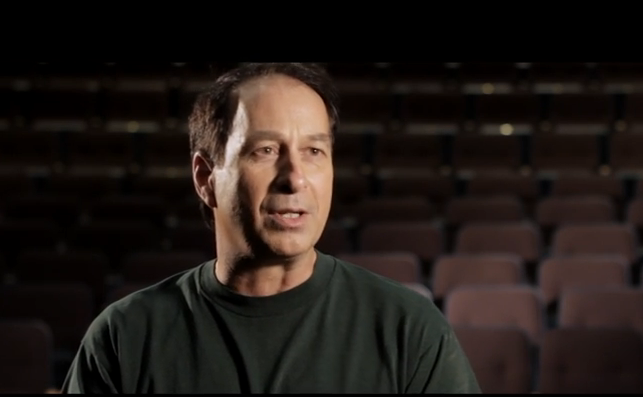
I thought that it was very important within the film that a little girl was featured. So often the misconception is that autism only affects boys.
Your message of “dads love too,” is a powerful message. Very often, as you say, those dad’s who do stick around are forgotten. What have other dad’s said to you about your role in bringing up Maria?
Some have said things like, “Wow, I couldn’t do that.” and I think, “Well, I hope you could. It’s your child and if you truly do love her or him like you say you do, then you WILL do whatever you have to do for them.” Some men drive big trucks and watch sports and smoke and drink hard and whatever; but the REAL Men are the ones who are there for their wives and children no matter what. Another thing I’ve heard from well meaning men is, “I really respect how patient you are with Maria.”, to which I say, “I’m not patient with her. I don’t need patience because I love her and am just grateful to have her in my life exactly as she is.” Sometimes people can’t understand how having someone like Maria and everything that comes with that; how it enriches your life so much.
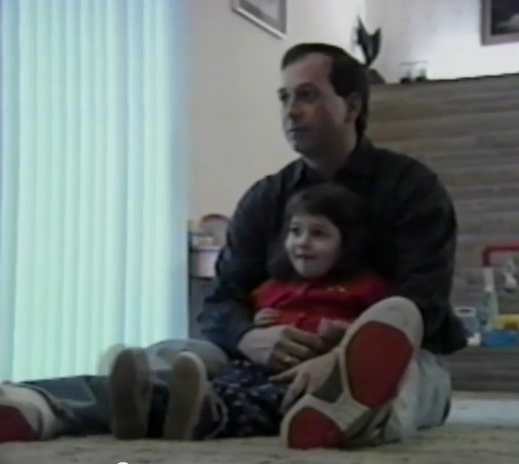
Life with Maria is amazing! Imagine constantly being around someone who is ALWAYS sweet and innocent; someone who has no guile, has no complaint, has no jealousy, has no resentment. I guess it is still challenging for our family to care for Maria. She will always need help with so many things: meals, baths, showers, hygiene, keeping her safe … so many things. But it’s what we do. Having Maria in our lives has blessed us as individuals and as a family. Everyone loves Maria and she is the centerpiece of our family. I am not exaggerating when I say this, but when I’m feeling stressed or down or worried; I just find Maria and give her a hug. Just feeling her sweet spirit and seeing that smile and those sparkling eyes of hers will always uplift the burdened soul. We have a friend who lived with us for about a year or so and who really got to know and appreciate Maria who said, “I actually feel sorry for people who don’t know Maria” …. that pretty much sums it up.
I like the way that you describe yourself as Maria’s bodyguard and that you have to protect her. Can you tell of any experiences/situations where you have had to ‘step in?’
No not really. In the beginning I was bothered by people who might stare at her in public and things like that, but these days I hardly even notice; mostly because I realized that they are not affecting Maria at all. She is not cognizant of what they are doing and so she is completely free of being affected by such things. As a matter of fact I want to get her a T-shirt that reads, “I have autism. What’s your excuse”
I would like to thank Scott, Mike, Jonathon, Damian and Mike for taking the time to answer my questions and for making and being part of such an inspiring film. Dads truly deserve to have a voice and this film gives them one.