


No I’m not practising for England versus Scotland in The Six Nations. However as someone with an interest in symbols and heraldry the Thistle with its green and purple beauty yet prickly surface is a powerful, uncontroversial and iconic symbol of Scotland, which is featured on the crest of a number of Scottish national sports teams.
Yet what symbol could possibly represent autism in a similarly iconic and undisputed manner? Currently the puzzle piece, an English invention reigns supreme having for better and for worse attracted a lot of attention and irritation in its different versions. The blue version is something which is used for World Autism Awareness Day and autism organisations including Autisms answer to the Auld Enemy: Autism Speaks. In contrast The National Autistic Society (which was the first organisation to use the piece) and a number of autism organisations in the UK have either replaced the puzzle piece with a different logo or started off with new ones.
This is because the puzzle piece represents one version of autism that is perceived by people who (mostly) aren’t on the spectrum. It was also developed in a time before people on the spectrum started to develop symbols to represent themselves, none of which have (at least individually) so far caught the public consciousness. Despite this a few interesting symbols have been created to represent autism.
For example a rainbow infinity loop or a sort of rainbow interlocking hexagon is used by the organisations including Autistic Self Advocacy Network. Another example is a conference for autistic people which is based in the UK-Autscape- which has an orange and white “coil and jump” which represents two key elements for autistic people in their lives “inertia and action”. So there are symbols out there that could be far more prominent.
However looking at the wider disability community although there are many symbols one common colour is increasingly rising above the rest: Purple and it’s a colour that’s in the public consciousness as being representative of disabled people. For example the former Minister of State for Disabled People Mike Penning and his successor Mark Harper have both made a reference to the “purple pound” which is a reference to the purchasing power of disabled people. There are also a number of autism organisations which use a dark shade of purple including Autism Rights Group Highlands (ARGH) and The National Autistic Society with white and pink. I asked Kabie Brook who is the convenor for ARGH about this. She said that purple came partly from the fact that it was the favourite colour at those who were present in ARGH’s initial meeting”. And added that “the colour also is supposed to ” supposed to be a symbol of diversity and a symbol of inclusion”, which could explain partly why it has been so widely adopted by disability organisations.
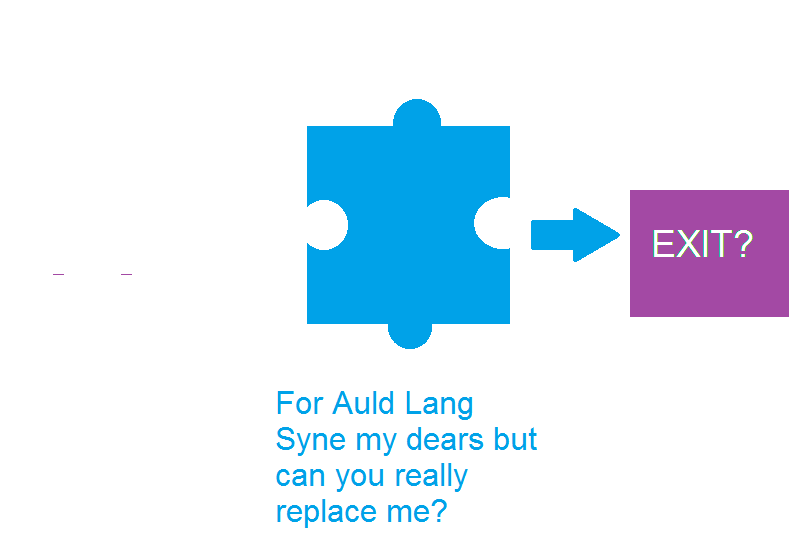
Overall the puzzle piece has done a good job of getting the initial word out about autism and been a distinctive symbol in the past. However different times demand that some symbols either evolve or get left by the way side. For the future it deserves to be retired or reinterpreted, maybe as the symbol of people working in the fields of international relations and international security. After all solving the puzzles of the ways that people and states interact with each other seems to be a far more fitting meaning for a symbol about solving human problems.
But that’s the thing with symbols and colours… they’re always open to different interpretations as to what they represent.
Even the prickly thistle!

Leo Capella is a disability rights campaigner, on the autistic spectrum (Aspergers Syndrome) and a part Celt in exile living somewhere in England.