


I’ll be honest, some parts made me laugh out loud, others I nodded at with a secret knowledge that only parents of an autistic child can have, (at this point I refer to the passage were Emma tells that she cannot hug her son as he is playing on the Wii), and through other passages of the memoir’s narrative, I cried.
The book is brutally honest, told in a diary format that covers a year in Emma’s life.
The book description reads as follows:
‘In February 2007 I was diagnosed with Bipolar type one after a long battle with post natal depression, where I was hospitalised numerous times. Throughout the period between 2004 to 2009 myself Noah and Moses were all given a diagnosis of something life changing, but as a mother I refused to be labelled and judged by a medical condition. I am Emma Plows; I am not Emma Plows with Bipolar.
It’s my understanding that when you discover your child is on the autistic spectrum you really need to accept the diagnosis. Accept it, let it grow and don’t hinder its development. Autistic people cannot understand how the world works like we can and have difficulty understanding how people think, but we can. We have that capacity to understand them, if we choose too we should take advantage of that capacity. If we don’t accept that our children are autistic, then we are only condemning ourselves and our children to a life of frustrating misery. Work with it, not against it, it doesn’t matter why they behave the way they do as we cannot change it, but we must find the beauty in the condition and all the positives it has to offer, if we try, it gets easier and can become very rewarding.’
After reading the book, I got in touch with Emma, to ask her a few questions. My interview with her can be read below.
Bipolar type 1 includes a large amount of mania. A person with bipolar 1 has episodes of both mania and depression. The presence of these episodes are the hallmark symptoms of bipolar I. People with this condition can become very manic over a matter of days and then have very low depressive episodes that can last for weeks. The depressive periods for me have been very debilitating and the highs have been amazing. Ever ripped up your lawn in half an hour and then laid a new one in the next twenty minutes? I have.
I like how you tell that you refuse to be labelled and this comes across beautifully in your book. You are a mum, wife and most importantly Emma. Did receiving your diagnosis take a long time to come to terms with this?
I always knew something was wrong from the time I suffered with post-natal depression. I just didn’t know who I was anymore. I wasn’t in control or as mentally strong as I had been. For years and years I was seen by different doctors who all had apposing opinions on my condition. I was given drug after drug after drug. I think these did more harm than good and it made me feel like the doctors were just using me like a guinea pig. Eventually I borrowed some money from my mum and saw a private doctor. He listened to me. It doesn’t sound like much but I believe listening more than you speak is a great attribute to a doctor. After two weeks and a second opinion I was diagnosed with Bipolar. I was given different medication and after a bit of trial and error it really stared to work well for me. You always hear the bad stuff about people with a mental illness but I feel like a success story. I’m well, I cope and I have hopes for the future. A label around my neck is no big deal. People will always be ignorant about things they don’t understand. It’s not the label we need; it’s the help that comes with that label. My boys see me as mum and that’s all I need.
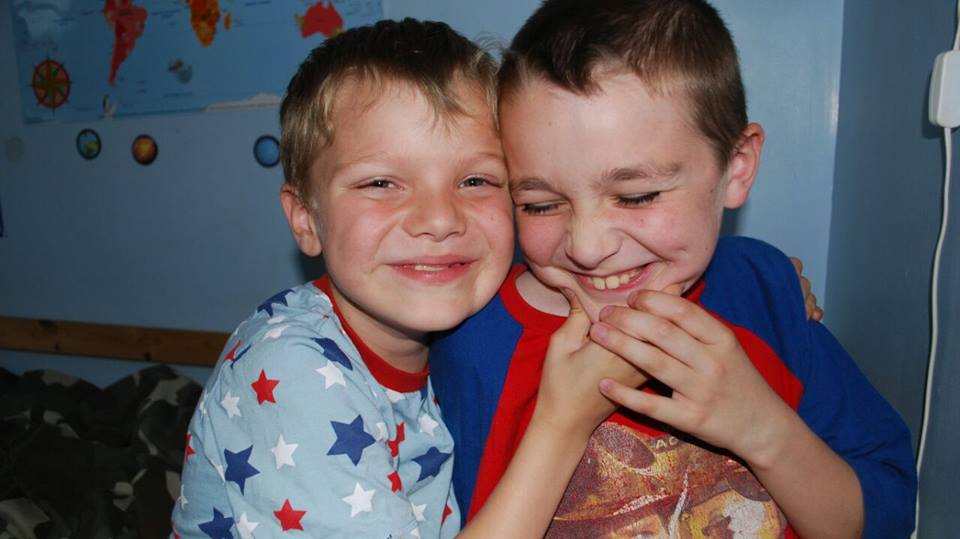
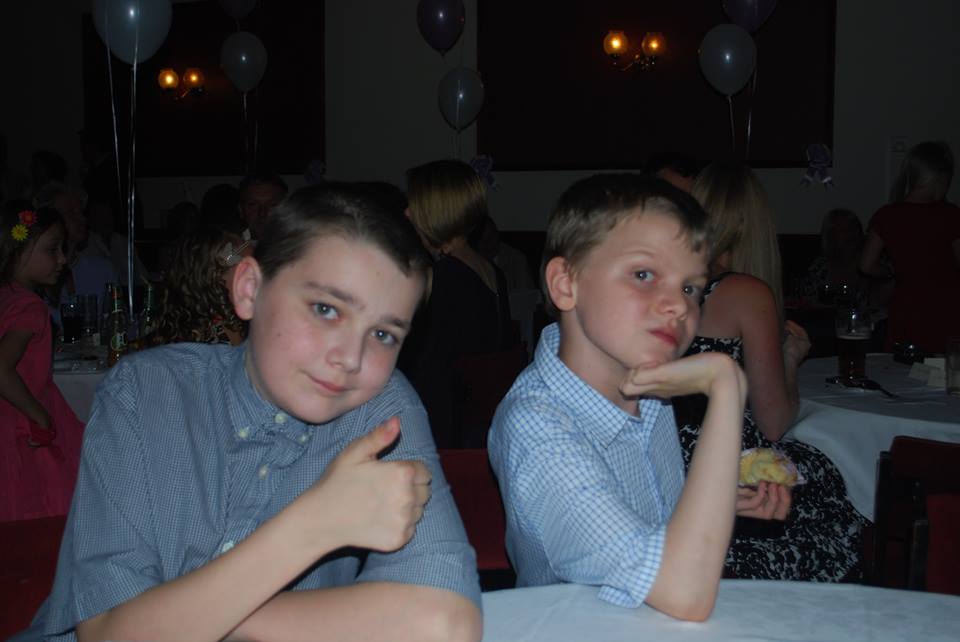
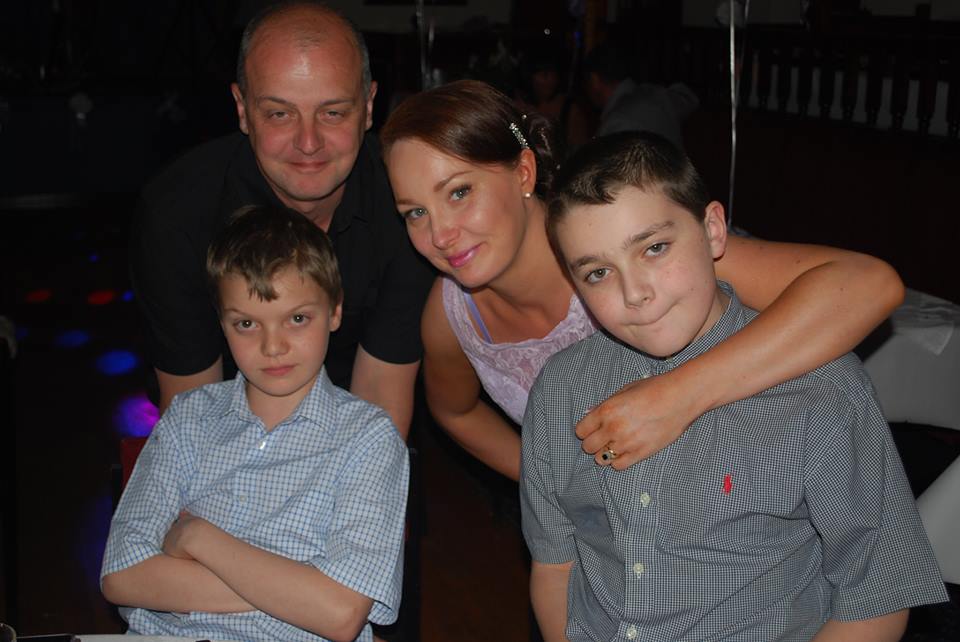
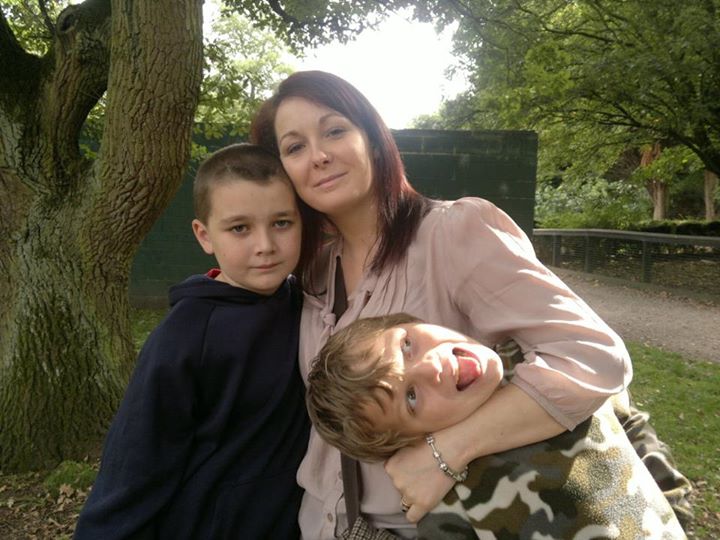
Noah was four when he was diagnosed with Asperger’s Syndrome, a form of autism. This was in 2004. Moses was diagnosed at the age of eight in 2011. I was diagnosed whilst doing my degree in psychology in 2009. Noah is now 14, Moses is 12 and I am 37. I’m a very organised person and have to keep everyday life simple. Noah and Moses are now teenagers but because of their condition have to have very simple instructions and we try to keep the same routine. My husband ben is my rock. When the day goes wrong, he pulls it all back together again. He keeps me strong when I need to be, leaves me alone when I need to be and organises the children when I am not well. I rarely get ill anymore as I have an excellent doctor now and am settled on my medication but it wasn’t always that way. Recovery for me was very slow and diagnosis for the children was very frustrating.
I like the way in which your book embraces autism, and that you love your boys for who they are. What are your thoughts on research and in particular Autism Speaks?
As a mum at a time when I wanted help for Noah I read and read and read so many articles on the internet and library. It drove me mad. I read articles that say you can cure autism, it’s the environment, its vaccinations or as I was told my one woman, I was a bad person in a previous life so that’s why I am getting payback now! I have worked with many children with autism and additional problems and understand the spectrum is huge. I have used ABA therapy with children and seen the amazing results it has had but that is certainly not for all people on the spectrum. I do not believe vaccinations cause autism and don’t believe its pollution or the will of god. We need to accept this condition, it isn’t going away. We need to understand that everyone’s brain is different, different but not wrong. I have accessed Autism Speaks many times and found the information on Pica very helpful as this an ongoing issue with Moses. Research into autism and treatments (not looking for a cure) is essential. I have used many different techniques with my sons such as social stories, visual diaries, tac-pac massage, 4d create space therapy rooms and of course we have our therapy dog Pink.
You write about the National Autistic Society (NAS), in what way have they supported you?
When I felt like the medical professionals and my family just wouldn’t listen to me I went to them. I was so desperate for anyone to believe that Noah was autistic. At the time I was in and out of hospital struggling with post-natal depression. Because of this I felt that people were just ignoring my concerns. I spoke to the NAS and after a few weeks they found me a private doctor that would come to my home to see myself and Noah. Getting help privately was all new to the NAS and I think they struggled to find me someone to leave the comfort of their nice NHS office and come to my home. They told me to write all my questions down so I didn’t forget anything and to stay calm and relaxed. I didn’t tell my husband as I knew he didn’t share my concerns and I just wanted to speak to someone who wasn’t aware of my illness. Doing this was one of the best decisions I ever made. The doctor came to my house and she listened to me. Just that, she listened, played with Noah on the rug and asked me how far I’d got in getting help for him. At the end of the visit she agreed with me that it was autism and I cried. She cried with me. Not because of the label he was going to get but because I finally had someone who agreed with me and I could finally go forward to get my son the right help. The doctor wrote to my health authority and six weeks later Noah has an assessment with four doctors, a speech and language therapist and a specialist health visitor. It took only fifty minutes and Noah had his label. I had the support of my husband and now the school. That was a great day.
Why did you decide to publish your diary? Were you worried about people’s responses to how honest and frank your writing is?
A couple of years before I was diagnosed I started to write my feelings down on scraps of paper. I felt that when I had wrote everything down that was upsetting me, in some way now belonged to that piece of paper and they were no longer my problems. This expanded into me writing a diary most days, when I looked back over the seven years of what I had wrote I really felt that although some of my days were a bit dramatic and confusing, that some of it could really speak to other mums and dads in similar situations. As parents we really do pressure ourselves into been the perfect parent. Is he warm enough? Is he as clever as other kids? Do all kids only want to wear green clothes and keep grapes in their pockets? I’m not a great believer in god but I always think that we wouldn’t be given a child that we couldn’t cope with, that we couldn’t make laugh, couldn’t fight for or that we couldn’t love more than life itself. I published this book because I need parents to know that its ok to not be perfect. There is no such thing. We deal with what we are given the best way we can. I did worry about the response as my book is very honest and I worried that people would think that my mind is still as unstable as it was when I wrote this book five years ago. I’m the healthiest I have ever been now. I have had an amazing response from over a hundred mothers and bipolar sufferers telling me that their life is so similar to mine and at last someone is saying it out loud. I don’t have to be mum of the year I just need to be me and try my best! I did however get a slightly negative response from my family. They weren’t too happy about the things I had wrote about my mother as it upset her. But all names have been changed and we have all spoken and this has now been cleared up. You can’t please everyone I suppose.
The book covers a year in your life and I feel like I joined you on your journey. What was the overall message or piece of advice that you hoped readers would gain by sharing your private life with them?
I suppose different people will take different things from this book. I would like to put across that mothers are allowed to be ill. Ask for help and don’t feel like you’re a failure because you’re asking for help. If you have a broken leg people can sympathise and treat your injury but if your mind is in need of repair it is just as important to fix. If you are not well then the family will not function as well as it could because you are important. I kind of relate it to the cabin crew on an aeroplane when they say, always secure your oxygen mask before your child’s. Your child can’t help themselves if you can’t help yourself. I would also like to say to parents that just because a health professional says your concerns about your children are not correct, doesn’t mean their right. Parents know their children better than anyone else. I have a lot of respect for health professionals who work hard to assist our kids but you are allowed to say that you don’t agree and get a second or third opinion. If I hadn’t of done that then I would never of got my boys or myself the help we needed.
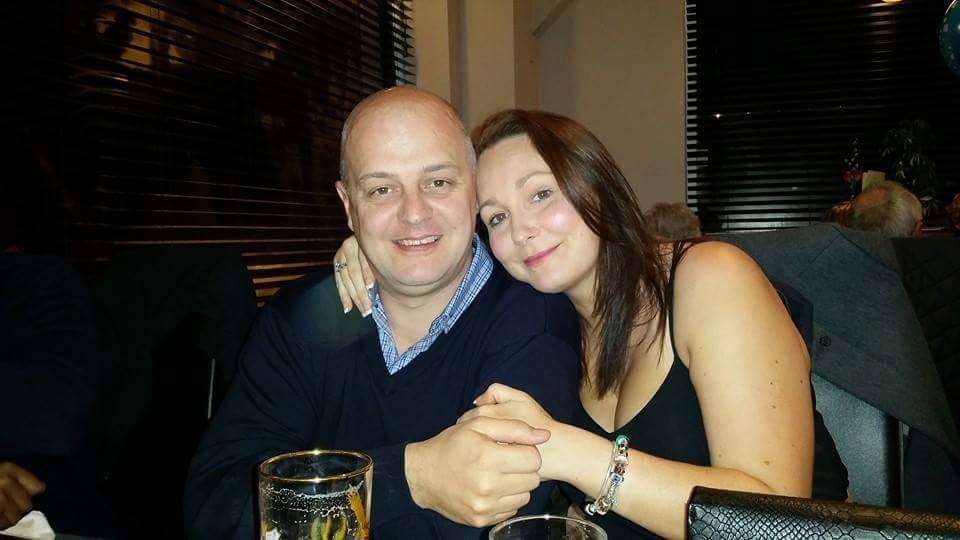
I’m smiling as I write this reply. I met Ben on my seventeenth birthday in a bar close to my home. I feel like we have grown up together. We want the same things in life, he makes me laugh, he knows when I am going high and he keeps me warm and cosy at night. If I am ever down and not coping very well he will take over and do everything that needs to be done. I always say he was a gift to me, but not to his face as he would get a big head. I’m very lucky.
Are there any future books planned?
The thing is I don’t really see myself as an author. My book is no great piece of English literature. I have dyslexia and really struggle to concentrate due to my medication. But, I do have a lot more material and I’d like to think my book speaks to people in a way that other books don’t. It’s frank and honest and says it how it really is. So the answer is yes but it will probably be next year now as I want to get it just right for the readers.
I would like to thank Emma for taking the time to answer my questions and for writing such an honest and thought provoking memoir.
You can follow Emma over on twitter https://twitter.com/PlowsEmma
Autistic Blessings and Bipolar me is available to buy from Amazon in both paperback and kindle format http://www.amazon.co.uk/Autistic-blessings-Bipolar-me-brutally-ebook/dp/B00UP14762/ref=sr_1_1?ie=UTF8&qid=1433852010&sr=8-1&keywords=Autistic+blessings+and+Bipolar+me